10-month programTrain the TeacherRobotics & AI · Class 1–12
Train the Teacher: Robotics & AI
Prepare one teacher in your school to teach IRI’s Class 1–12 Robotics & AI curriculum with confidence.
1 teacher per school
Hands-on programs for school students, teachers, college students and graduates, from Kerala’s industry-backed robotics institute.
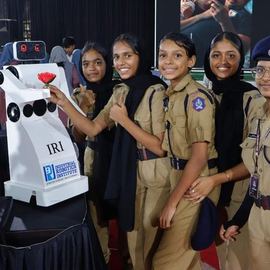
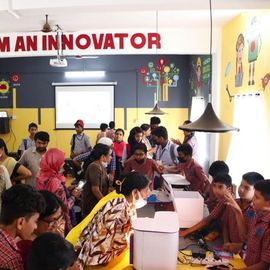
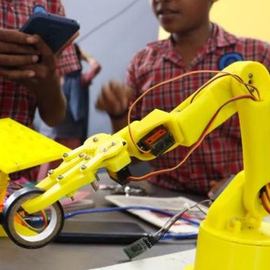
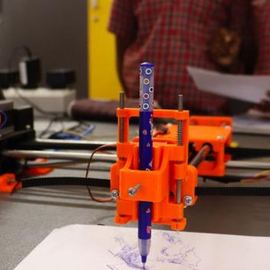
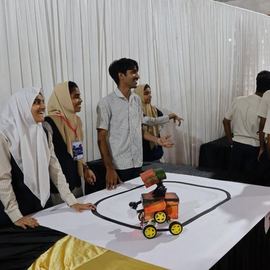
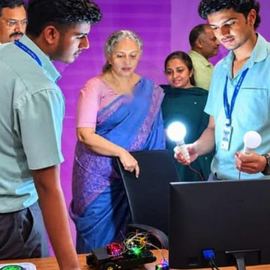
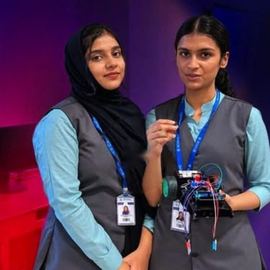
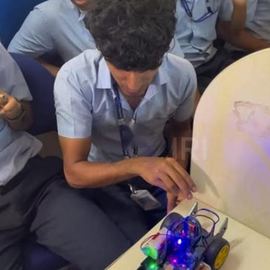
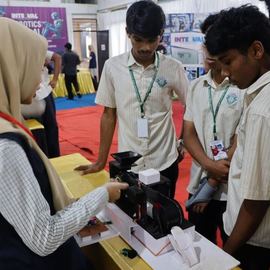
A complete Robotics & AI pathway from Class 1 to Class 12, built on IRI’s own grade-wise textbook series for Class 1–12. Each class builds on the one before, with weekly hands-on sessions and real kits for every group.
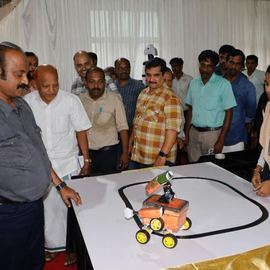
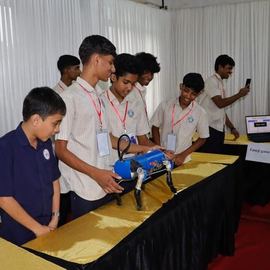
The work of our schools and students: robots, code and inventions built in IRI labs, classrooms and science expos.
Short reels of robots, code and inventions built by IRI students. Tap any reel to watch it on Instagram.
Two programs: one prepares a teacher to run IRI’s robotics and AI classes in their school, the other helps any teacher save time with AI tools.
Prepare one teacher in your school to teach IRI’s Class 1–12 Robotics & AI curriculum with confidence.
Create lesson plans, question papers, slides, audio and video lessons in minutes with 20+ AI tools.
If you answer yes to most of these, the program is a good fit.
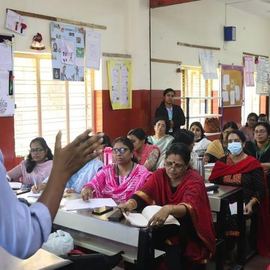
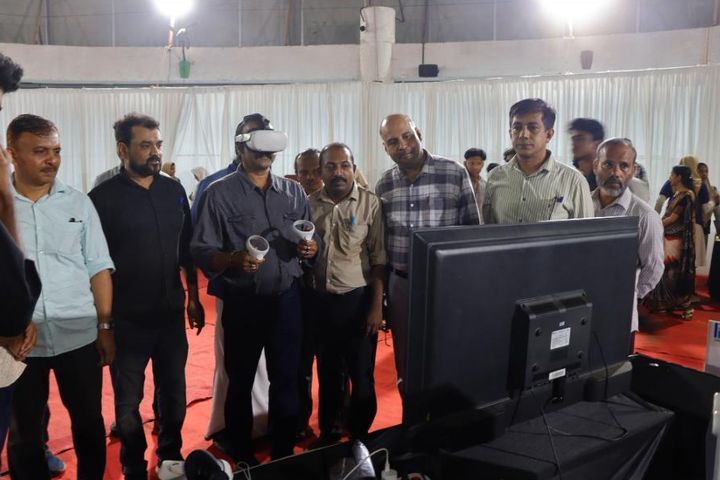
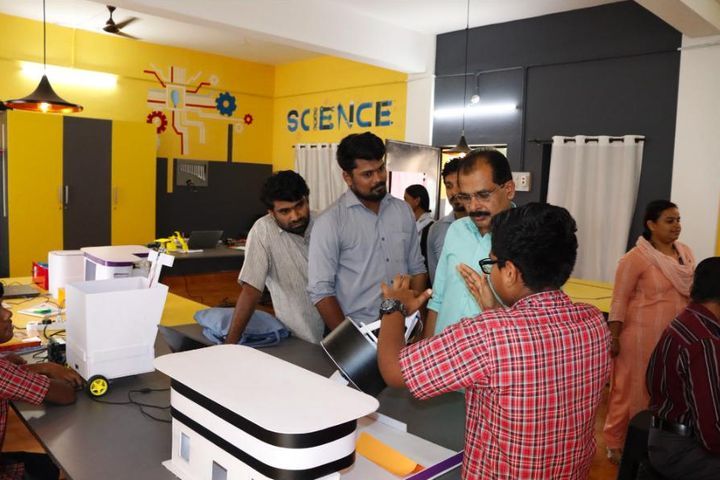
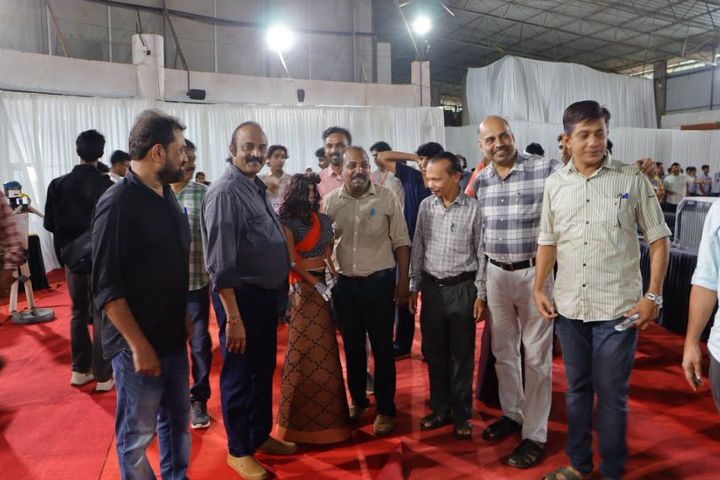
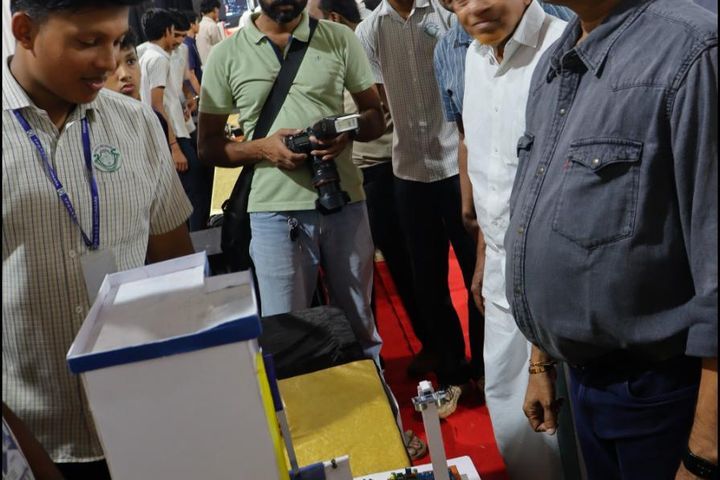
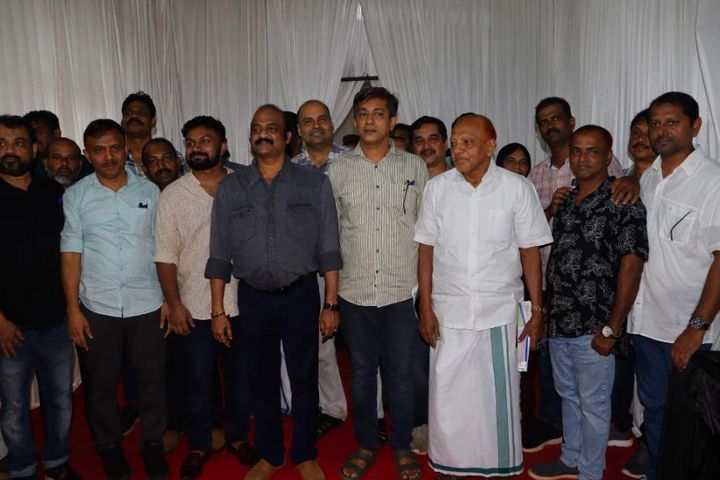
Moments from IRI teacher trainings and showcases, where educators build, code and try new technology first-hand before taking it to class.
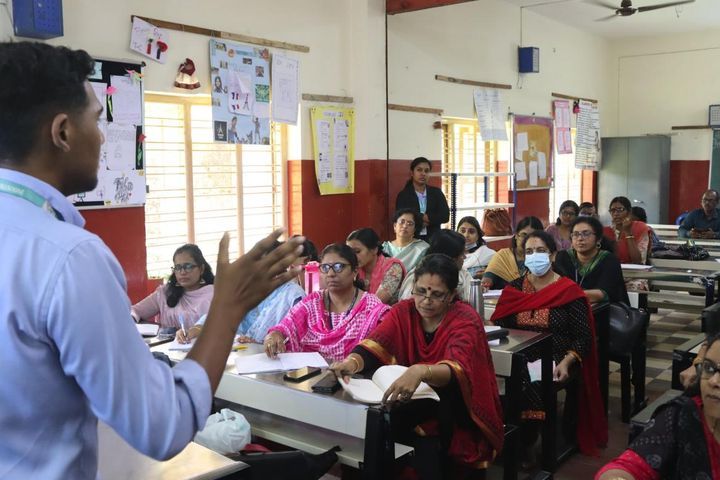
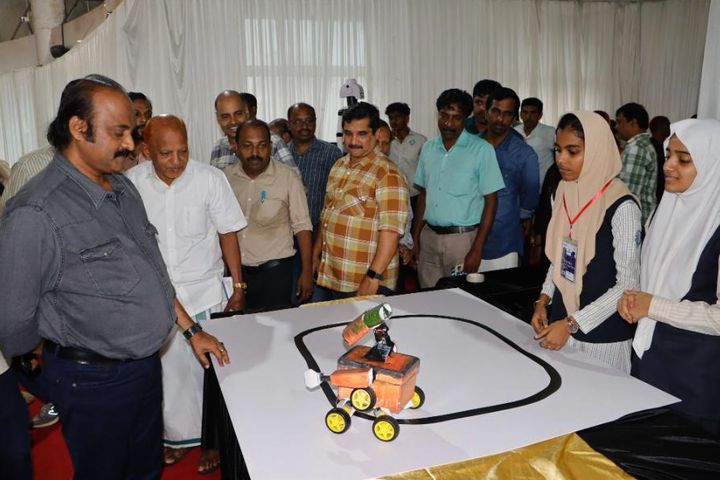
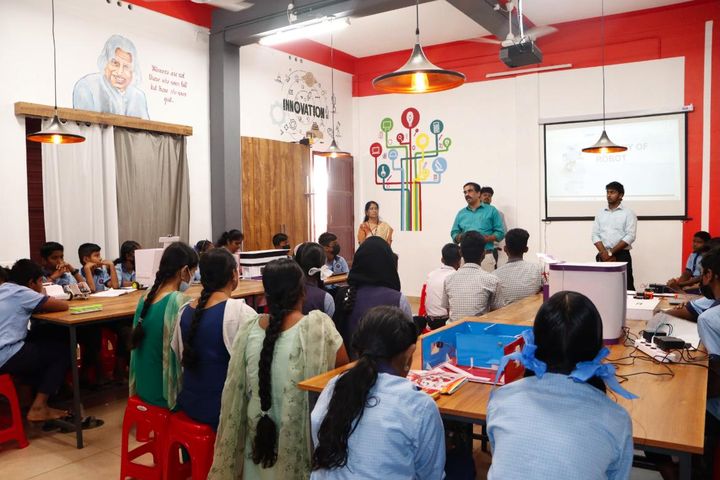
Quick reels from IRI teacher workshops and showcases. Tap any reel to watch it on Instagram.
Industry-ready Robotics, IoT and Embedded Systems courses for arts and science colleges. IRI brings the kits and trainers, and students build a real project in every session.
60-hour programs cover everything in the 30-hour course at a steadier pace, then add advanced and industry topics. They run as two 5-day blocks: Block 1 builds strong foundations, Block 2 adds industry depth and a bigger capstone. Ideal for final-year UG and PG students.
Reels from IRI add-on workshops at colleges across Kerala. Tap any reel to watch it on Instagram.
Every student who completes the course receives an add-on course certificate with the IRI logo and your college logo. Top performers also earn a Certificate of Merit.
Students leave with a real portfolio: project code, wiring diagrams, a one-page capstone summary and a demo video to show in interviews and on their CV.
Longer, job-focused programs for graduates. Suggested courses to fill it:
Our Class 1–12 pathway is designed in line with the National Education Policy 2020 and its focus on experiential, skill-based learning.
Every class is built around hands-on projects with real kits, as NEP recommends for experiential learning.
Step-by-step logic from Class 1, block coding from early grades and text coding from the middle stage.
Age-appropriate AI concepts at every level, building up to machine learning and responsible use of AI tools.
Electronics, IoT, app building and 3D design prepare students for 21st-century careers.
Students are assessed through worksheets, coding tasks, hardware testing and group projects, not just written tests.
Projects connect science, maths, energy, agriculture and safety to technology.
Technology is changing how students learn. IRI helps teachers stay ahead, whether they teach robotics or any other subject.
Our team visits your school and runs a live robotics session for students and staff.
Qualified IRI trainers teach the class-wise curriculum on campus in one or two periods a week, within your timetable.
Students finish the year with working projects of their own, presented at a school showcase day.
Answers for teachers, principals and training institutes about IRI’s teacher programs and training methodology.
A Train the Teacher (ToT) program prepares a school’s own teacher to teach robotics and AI to students. IRI’s Train the Teacher: Robotics & AI program trains one teacher per school on IRI’s complete Class 1–12 Robotics & AI curriculum.
Training runs on campus twice a month for 10 months, and the teacher receives the IRI ToT certificate on completion. The school builds lasting in-house capacity instead of depending on an outside trainer.
Yes. Basic computer skills and commitment are enough to start. IRI training begins with the foundations, such as simple circuits, block coding and kit handling, and builds step by step to Arduino, IoT, Python and AI.
The program is best suited to computer science teachers, followed by science and technical teachers, because the syllabus connects closely with what they already teach.
Teachers learn the full IRI Class 1–12 syllabus: Scratch and ScratchJr, electronics and circuits, Tinkercad, Arduino programming, sensors and motors, obstacle-avoiding robots, MIT App Inventor, Proteus, Onshape 3D design, soldering, ESP32 and IoT Cloud, Teachable Machine, Python, computer vision, machine learning and PCB design.
Training also covers how to teach: lesson planning, running practicals, lab safety, kit care, assessment and student exhibitions.
IRI trains teachers the same way their students will learn: hands-on, project-based and step by step. Teachers build every project with the same IRI kits and textbooks used in class, then practise teaching it through demo classes.
Each topic follows a simple cycle: learn the concept, build it, troubleshoot it, then plan how to teach it. Between campus sessions, IRI clears doubts online and on WhatsApp, with phone support for urgent issues.
With proper planning, the teacher starts teaching students from the third month of training. IRI and the school plan the training schedule and the classroom teaching schedule together.
Training on the next parts of the syllabus continues alongside, so students start learning robotics and AI in the same academic year.
Teachers are assessed continuously through practical tests and demo classes, followed by a final assessment at the end of the 10 months.
Teachers who complete the program receive the IRI ToT certificate. Schools can renew the program for the next academic year if they wish.
The school needs a basic computer lab, a minimum of 10 robotics kits and 1 tool kit from IRI, and training time in the timetable twice a month. IRI textbooks are optional.
The school nominates one teacher, who needs a basic laptop and basic computer skills. Fees are quoted for each school based on the kits, textbooks and training program.
Teachers learn 20+ AI and digital tools, including ChatGPT, Gemini, Perplexity, Microsoft Copilot, NotebookLM, MagicSchool AI, Eduaide AI, Khanmigo, QuestionWell, Knowt, Quizizz AI, Gamma, Canva, Curipod, Natural Reader, TTSMaker and AI video tools.
Tools are taught by task, such as lesson plans, question papers, slides, audio lessons and videos, so teachers know which tool to use for each job.
AI can draft a lesson plan, a marks-wise question paper with an answer key, slides and revision audio in minutes. In IRI’s Smart Teaching program, teachers learn a simple workflow that turns one topic into a full lesson set in 40–60 minutes.
Teachers who use this workflow regularly can save around 5 hours of preparation every week, while still reviewing and improving everything AI produces.
Yes. AI tools work for every subject, including languages, mathematics, science, social science and commerce. IRI’s Smart Teaching program uses examples from different subjects and classes.
Teachers learn to create explanations in simple language, remedial worksheets for weak students and translations, including Malayalam, for multilingual classrooms.
AI is safe and useful when used responsibly. IRI’s Smart Teaching program includes a full session on ethical AI use: plagiarism, data privacy, AI bias and keeping students thinking for themselves.
Teachers learn to guide students to use AI for understanding, not copying, and to treat AI as an assistant, not an exam shortcut.
On campus, it is a 1-day hands-on workshop from 9 AM to 5 PM for 25 to 100 teachers, led by a team of IRI trainers at the school or training institute.
For individual teachers and groups of fewer than 25, it runs online as a 20-day course of 1 hour a day, from basics to advanced. Teachers need only a computer, tablet or smartphone, and receive an IRI certificate in both formats.
Yes. B.Ed colleges, D.El.Ed institutes and teacher training institutes can book IRI’s Smart Teaching workshop for their faculty and student teachers.
Student teachers enter the classroom already able to plan lessons, build assessments and create digital content with AI.
Answers for principals, teachers and school management about IRI’s robotics and AI programs.
IRI offers robotics, AI and electronics programs for schools across all 14 districts of Kerala, with on-campus classes and complete lab setup.
We also support schools across India and abroad, including GCC countries, through online training for students and teachers. Our office is in Kerala, India.
No. Schools can start IRI robotics and AI classes in their existing computer lab, so there is no big lab investment up front.
Computers are required for coding and simulation, and the school buys IRI robotics kits for hands-on sessions. Classes are scheduled within the school timetable using the current computer lab. When a school is ready, IRI also designs and installs a complete Robotics & AI lab, with new computers or laptops, furniture, kits and full setup.
Most schools schedule one 45-minute robotics and AI period per week for each class, which reaches every student in the school.
For deeper hands-on learning, IRI recommends two continuous periods per week. Classes fit into the school’s regular timetable, and any missed classes can be made up on another day arranged with the school.
Qualified IRI trainers come to the school and teach the students directly.
Every IRI trainer is a technical graduate, has completed IRI’s Training of Trainers (ToT) program, and has hands-on experience teaching robotics, AI and electronics to school students. Schools don’t need their own robotics teacher to start the program.
The training fee depends on the number of students enrolled, and IRI bills the school monthly. Robotics kits and textbooks are quoted separately, based on what the school needs.
Robotics kits are a one-time purchase that the school keeps as a long-term asset. The minimum is 10 student kits plus 1 tool kit, and more can be added as student numbers grow. Textbooks are supplied in the quantity the school requires. The demo class is completely free. Contact IRI for a quote tailored to your school.
Yes. IRI’s robotics, AI and electronics programs suit every board and syllabus: CBSE, ICSE / ISC (CISCE), Kerala State Board (SCERT), other State Boards and NIOS in India, and Cambridge (IGCSE), IB, British and American curriculum schools internationally, including schools in GCC countries.
The curriculum runs alongside the school’s existing subjects, and IRI customises it to match each school’s syllabus, grade levels and timetable, including for international clients.
The free demo is a 1–2 hour hands-on session at your school. Selected students build a few robotics projects with an IRI trainer, while teachers, the principal, management and PTA members can watch IRI’s teaching method in action.
Schools can book a free demo through the website, on WhatsApp or by phone. IRI calls back within 24 hours of receiving the enquiry.
Yes. IRI handles the full Robotics & AI lab setup from start to finish: design, fabrication, material supply and branding.
Our team visits the school, inspects the space and gives a detailed quotation. Advanced equipment such as 3D printers and telescopes is quoted separately. Work begins once the school confirms the order and pays the advance. Materials are supplied in 2–3 weeks, and fabrication and installation usually take 1–2 months. IRI provides year-long maintenance and after-sales support; repair or replacement of materials damaged through use is the school’s responsibility.
IRI assessment focuses on practical skills. Throughout the year, students are assessed through hands-on practical sessions, worksheets and project work.
Theory and practical examinations are held twice a year, and the marks are submitted to the school. At the end of the academic year, or at the start of the next one depending on the school’s calendar, students present the robotics and AI projects they built at a school exhibition.
Yes. IRI has its own grade-wise Robotics & AI textbook series for Class 1 to Class 12, and all classes are taught from it. Each book includes lessons, hands-on activities and worksheets.
Schools that want textbooks for their students can order them from IRI. They are quoted separately from the training fee. Buying the textbook is optional for students.
Yes. Student safety is a top priority in every IRI session. Classes use low-voltage electronics and battery-powered kits only.
Younger students do not use sharp tools, and soldering is introduced only from Class 8 onwards under close trainer supervision. Activities progress step by step with each student’s age and skill level, and every session is led by a trained IRI trainer who follows IRI’s safety guidelines.
Yes. The IRI Class 1–12 pathway is designed in line with the National Education Policy (NEP) 2020.
It follows NEP’s focus on hands-on experiential learning, coding and computational thinking from Class 1, age-appropriate AI at every level, project-based assessment, and stages that match NEP’s 5+3+3+4 structure.
IRI combines real industry experience with school teaching. IRI runs its own in-house production unit for industrial products, so students learn the skills industry actually needs, on one progressive path from Class 1 through to professionals.
IRI has trained 60,000+ learners and installed 180+ Robotics & AI labs. Schools get IRI’s own Class 1–12 textbooks aligned with NEP 2020 and suitable for every board, qualified trainers who have completed the IRI ToT program, and end-to-end support from a free demo to complete lab setup and year-long maintenance.
Answers for principals, heads of department and faculty about IRI’s 5-day hands-on add-on courses.
IRI offers three 30-hour hands-on add-on courses for colleges: Hands-On Robotics & Automation, Hands-On IoT & Industrial IoT, and Hands-On Electronics & Embedded Systems (Arduino).
Each course runs on campus over 5 continuous days, and 60-hour versions are coming soon.
Each course is 30 contact hours over 5 continuous days. Every day has four 90-minute project sessions from 9:00 AM to 4:15 PM, with tea and lunch breaks.
Running the days back to back keeps students focused, so each day builds directly on the projects from the day before.
Robotics & Automation suits BCA, MCA and BSc/MSc Computer Science students. IoT & Industrial IoT suits Computer Science and Electronics students. Electronics & Embedded Systems suits BSc/MSc Electronics and Physics students.
All three courses are also open to Computer Science, Electronics and Physics students outside their best-fit group.
No prior robotics or IoT experience is needed. Basic programming in C or Python is enough for the Robotics and IoT courses, and a short refresher on voltage, current and Ohm’s law is shared before Day 1.
The Electronics & Embedded Systems course expects basic C and theory-level knowledge of Ohm’s law, diodes, transistors and logic gates.
No. IRI brings complete project kits for every team, along with trainers, starter code and lab sheets.
The college arranges the students, a computer lab or laptops (one per team), a 2.4 GHz Wi-Fi network for the Robotics and IoT courses, and the venue for 5 days.
One batch can have 30 to 100 students. Students work in small teams that share one kit, and the team size depends on the total batch strength.
Students build 16 projects and a team capstone: obstacle-avoiding and line-following robots, a 4-DOF robotic arm that picks and sorts objects, stepper motion, phone control over MQTT, PLC ladder logic, an ESP32 running as a ROS2 node, and a vision-guided sorting cell that uses a trained YOLO model.
Students build a smart farm with automatic irrigation, a smart home with security and live browser control, a DC battery monitor with cloud history, and an industrial Modbus RS-485 sensor node.
The capstone is a real smart power meter product with live dashboards, alarms and cloud history, integrated with the smart home.
Assessment is fully practical, with no written exam. Marks come from project check-offs (35%), the capstone project (35%), project documentation (15%), daily quizzes (10%) and attendance and teamwork (5%).
Students who score 50% or more with at least 80% attendance receive an add-on course certificate carrying the IRI logo and the college logo.
Students scoring 80% or more receive a Certificate of Merit.
Every student leaves with a portfolio of real work: project code, wiring diagrams, a one-page capstone summary and a capstone demo video, which they can show in interviews, higher-studies applications and on their CV.
Yes. In the Robotics and IoT courses, students use AI coding assistants to understand and debug code, and they must be able to explain every line they keep. The Robotics course also includes training an AI object-detection model.
Request a free demo through the enquiry form, WhatsApp or phone. IRI calls back within 24 hours, runs a short demo for students and faculty, and plans the dates, batch size and lab checks with the department.
The 30-hour courses run over 5 continuous days. The 60-hour courses cover everything in the 30-hour course at a steadier pace, then add advanced and industry topics such as ROS2 navigation, Modbus TCP gateways, IoT security, over-the-air updates, soldering and PCB design.
60-hour courses run as two 5-day blocks and end with a bigger team capstone.
The 60-hour courses suit the same Computer Science, Electronics and Physics students as the 30-hour courses, and are ideal for final-year UG and PG students who want deeper, project-ready skills for jobs, internships and final-year projects.
Each 60-hour course runs as two 5-day blocks on campus, with four 90-minute project sessions a day. Block 1 (Days 1–5) builds strong foundations; Block 2 (Days 6–10) adds advanced and industry skills and the capstone. The college and IRI fix the dates for both blocks together.
Tell us what you are looking for. For schools and colleges, we arrange a free demo on your campus. We call back within 24 hours.
Choose a program and tell us who you are. We share the schedule and a quote within 24 hours.