The Internet of Things connects sensors and machines to the cloud, and it is one of the most practical areas a computer science or electronics student can learn. The good news is that IoT projects for college students no longer need expensive hardware. A low-cost ESP32 board with built-in Wi-Fi and Bluetooth is enough to build real systems. This article lists six projects for BCA, BSc and MCA students, explains the technologies behind them, and gives tips for picking a final year IoT project.
The core IoT toolkit
Most student IoT projects use the same building blocks. Learn these once and you can build almost anything:
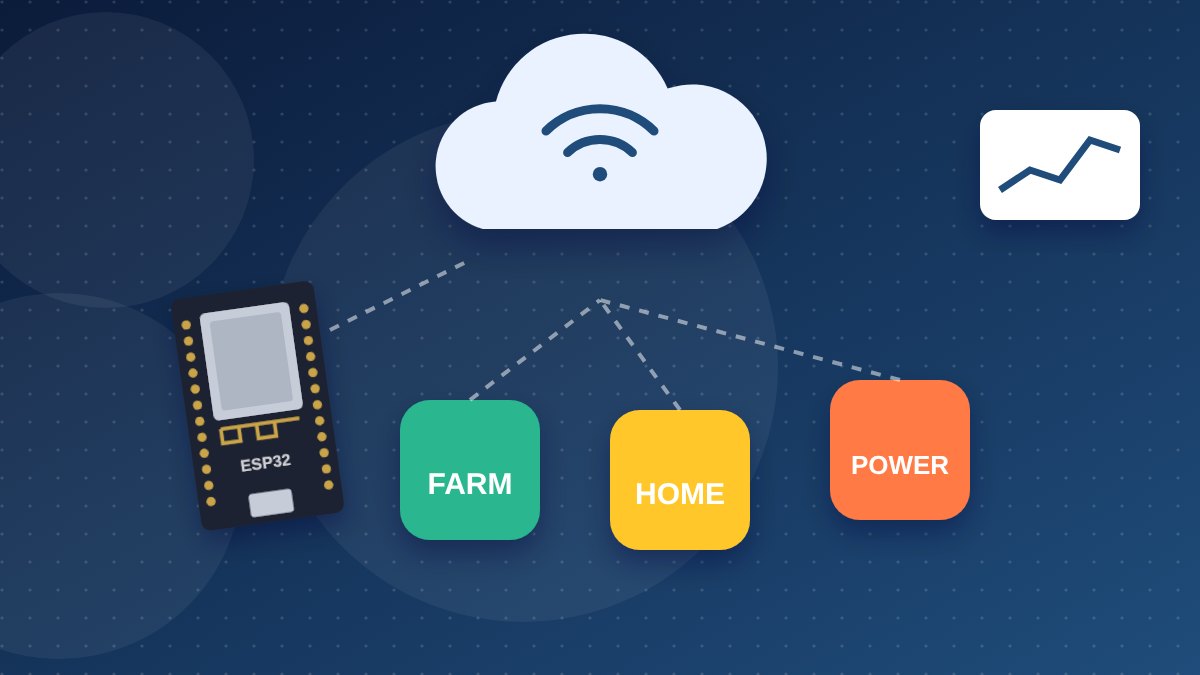
- ESP32: a microcontroller with Wi-Fi and Bluetooth, programmed with the Arduino IDE or MicroPython.
- MQTT: a lightweight publish and subscribe messaging protocol. Devices publish data to topics on a broker, and dashboards subscribe to those topics.
- Node-RED: a flow-based tool for wiring devices, APIs and dashboards together with drag-and-drop nodes.
- Firebase: Google’s cloud platform, whose Realtime Database lets devices and apps share live data.
- Modbus RS-485: a long-standing industrial protocol used by energy meters, PLCs and industrial sensors.
Six ESP32 IoT projects to build
1. Wi-Fi weather station
Hardware: ESP32, DHT22 or BME280 sensor, optional rain sensor.
The ESP32 reads temperature, humidity and pressure and publishes them over MQTT every minute. A Node-RED dashboard shows live gauges and history charts. Skills: sensor interfacing, MQTT topics, dashboards.
2. Smart home control with Firebase
Hardware: ESP32, two-channel relay module, LEDs or low-voltage lamps for testing.
A web page or Android app writes ON or OFF values to Firebase Realtime Database. The ESP32 listens for changes and switches the relays. Add a manual switch and keep the app in sync with it. Skills: cloud databases, mobile or web front ends, two-way control.
3. Smart farm irrigation
Hardware: ESP32, capacitive soil moisture sensor, small 5V pump with relay or MOSFET, water level sensor.
The system reads soil moisture and switches on the pump when the soil is dry, then logs every watering cycle. Farming is a large part of life in India, from home gardens to plantations, so this project has a clear real-world story for viva and demos. Skills: analog sensors, calibration, automatic control logic.
4. Smart power meter
Hardware: ESP32, an energy meter module that measures voltage, current and power, display module.
The meter sends readings to a dashboard that shows live consumption and daily usage. Students can add alerts when power use crosses a limit. Any work involving mains electricity must be done under faculty supervision using properly enclosed, rated modules. Skills: electrical measurement, data logging, alerts.
5. Industrial IoT monitor with Modbus RS-485
Hardware: ESP32, MAX485 or similar RS-485 transceiver module, a Modbus RTU device such as a sensor or meter.
The ESP32 acts as a Modbus master, polls registers from the device and forwards the values over MQTT to Node-RED. This is how many factories connect existing machines to modern dashboards. Skills: serial protocols, register maps, the bridge between operational technology and IT.
6. Smart parking or occupancy counter
Hardware: ESP32, ultrasonic or IR sensors, LEDs.
Each sensor detects whether a slot is free. The ESP32 updates a live web page showing free and occupied slots. Scale it up with several boards sharing one MQTT broker. Skills: multi-device systems, web servers on the ESP32.
How to choose a final year IoT project
Examiners value projects that solve a real problem and that students can explain clearly. Use these checks:
- Pick a real user. A farmer, a shop, a hostel or your own college. A clear user makes the problem statement easy to write.
- Keep the hardware simple. Two or three sensors done well beat ten sensors that fail during the demo.
- Show the full stack. Sensor, microcontroller, protocol, cloud and dashboard. This shows you understand the whole system.
- Add one smart feature. Alerts, simple predictions, or automatic control make the project stand out.
- Document as you go. Keep circuit diagrams, code on GitHub, photos and test results for your report.
A project you built and debugged yourself is also strong material for job interviews, because you can explain every design choice.
Why a hands-on IoT workshop helps
Many students learn IoT theory in class but rarely touch the hardware. A short, focused workshop gives you time with real boards, real sensors and real debugging. You also learn how professionals structure IoT systems, which saves weeks when you start your final project.
Key takeaways
- The ESP32 with MQTT, Node-RED and Firebase covers most student IoT projects.
- Modbus RS-485 projects add industrial IoT skills that few students have.
- Good final year projects solve a real problem with simple, reliable hardware.
- Show the full chain from sensor to dashboard and document every step.
Join IRI’s Hands-On IoT & Industrial IoT course
IRI runs Hands-On IoT & Industrial IoT as a college add-on course for BCA, MCA, BSc and MSc Computer Science, Electronics and Physics students, especially final-year UG and PG batches. It comes in 30-hour (5 days) and 60-hour (10 days, two 5-day blocks) versions and covers ESP32, MQTT, Node-RED, Firebase, Modbus RS-485, smart farm, smart home and smart power meter projects. The course is 85% hands-on, IRI brings all kits, and students build 16+ to 26 projects plus a team capstone. Batches take 30 to 100 students, and each student receives a certificate.
To bring this IoT workshop to your college, call 8606082634 or email inrobos@gmail.com.
30-hour or 60-hour hands-on Robotics, IoT and Embedded courses. IRI brings all kits.
Call 8606082634 · inrobos@gmail.com
Frequently asked questions
Is ESP32 better than Arduino Uno for IoT projects?
For IoT, yes in most cases. The ESP32 has built-in Wi-Fi and Bluetooth, more memory and a faster processor, and it can still be programmed with the Arduino IDE.
Can BCA and MCA students do hardware IoT projects?
Yes. IoT projects are mostly software: cloud setup, protocols, dashboards and apps. The hardware side uses simple modules that computer science students can learn quickly with guided practice.
What makes a good final year IoT project?
A clear real-world problem, reliable hardware, a complete chain from sensor to dashboard, and good documentation. One smart feature, such as alerts or automatic control, helps it stand out.